A conference defined by who is not in it
The Sun Belt's identity was always relational — shaped less by what it contains than by the SEC border it sits against.

The conference an hour away
Every Sun Belt programme in Louisiana operates in the gravitational field of the same fact: LSU is right there. Tiger Stadium in Baton Rouge seats over 102,000 people, and in a strong season its athletic department generates revenues that dwarf what most Sun Belt members spend on their entire operation. The gap is not a rivalry; it is a category difference. A programme like ULM in Monroe or Louisiana in Lafayette is not trying to beat LSU in the market — it is trying to survive adjacent to it, recruit around it, and occasionally sell its services to it in the form of a guarantee game, where the Sun Belt school travels to Baton Rouge, absorbs a predictable loss, and returns home with a check that pays for scholarships across sports that will never appear on ESPN.
That transactional relationship defines Sun Belt football more honestly than any trophy or divisional title. The conference was formally reconstituted as a football-playing body in 2001, and its Louisiana members — ULM and Louisiana — have always lived in a landscape where the largest programme in the state is not a peer institution. It is a landlord collecting rent in the form of regional media attention, in-state recruiting priority, and occasional gate revenue whenever a Sun Belt school makes the trip down I-20 or I-10 to play in front of 80,000 people the week before conference play begins.
What the budget actually buys
The economics of a Sun Belt athletic department look nothing like the SEC equivalent even at the surface level. Where LSU or Alabama operate on annual athletic budgets well above $100 million, a typical Sun Belt programme in Louisiana runs somewhere between $20 million and $35 million for the entire department — football included — and football consumes the largest share of that. The NCAA's own financial database has tracked for years the consistent pattern in which most FBS Group of Five and non-Power programs generate less revenue than they spend, with institutional subsidy and student fees filling the gap. The guarantee game is one of the few mechanisms by which a Sun Belt programme can import revenue rather than generate it internally, which is why the fee appears in the athletic department budget as a genuine line item rather than a scheduling footnote.

Scholarship limits under NCAA Division I rules cap a programme at 85 football scholarships, the same number LSU carries, and that surface equality is somewhat misleading. Eighty-five scholarships adequately funded are not the same as 85 scholarships funded to the margin, and when the roster competes for players who also have SEC interest, the Sun Belt programme is negotiating on terms it did not set. The practical result is that Sun Belt coaches in Louisiana have historically built competitive football by recruiting players the power conferences missed — players from smaller markets, players who needed another year to develop, transfers who saw playing time where a larger programme would not have offered it.
Lafayette and Monroe are not the same programme, but they operate on similar structural logic. Cajun Field in Lafayette has been expanded in increments that reflect what the University of Louisiana's athletic budget could absorb in a given capital cycle, not what a master plan required. Malone Stadium in Monroe seats around 30,000, which is a number sized to the programme's realistic draw — honest in a way that an aspirationally oversized facility would not be. Both stadiums serve double duty as recruiting tools and as physical arguments for the programme's existence in a state where one school holds a monopoly on the Saturday-night conversation.

The identity question
The Sun Belt's competitive identity has sharpened since the conference added programs like Appalachian State and James Madison — schools with genuine FCS championship pedigrees that translated into FBS competitiveness faster than the league expected. Appalachian State's arrival in particular changed the conference's internal prestige ladder and gave it a program with national name recognition beyond the regional market. That matters for television contracts, which are the mechanism by which conference membership pays out in cash, and cash is what the budget line cares about.
The Louisiana members of the conference have their own internal hierarchy. Louisiana in Lafayette has won Sun Belt championships and reached the Sun Belt title game and finished nationally ranked in the restructured era, which reshaped what was considered achievable at this budget level. ULM in Monroe operates at a more constrained level, though it has played in bowl games and produced NFL-level talent. Northwestern State, which has never played at the FBS level, sits in the FCS Southland Conference, a reminder that the line between FBS and FCS membership is a financial classification as much as a competitive one — a programme stays at the FBS level if it can sustain the scholarship and facility standards the NCAA requires, and drops when the math no longer works.
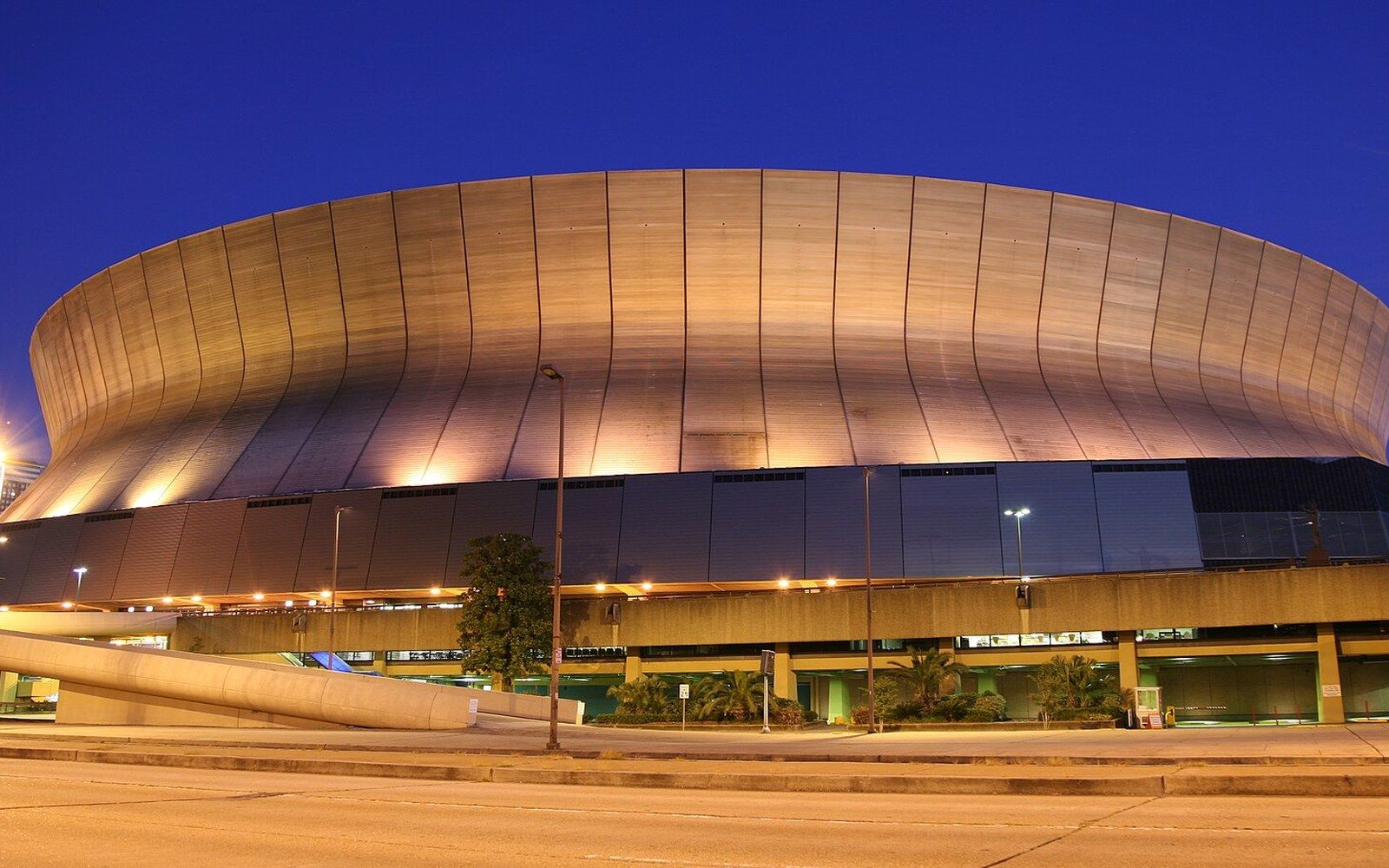
The conference's regional identity is further complicated by what sits to its east and south: Tulane in the American Athletic Conference, which occupies a different financial tier; Southern University and Grambling State in the SWAC, where the tradition of historically Black universities produces football — and marching bands — on a model so different from the Sun Belt that the two exist in near-parallel cultural universes within the same state. The Bayou Classic, played annually in the Caesars Superdome in New Orleans, draws a crowd invested in a version of the game where the halftime performance carries as much cultural weight as the final score. That event and the Sun Belt's brand share geography without sharing much else.
What the Sun Belt conference has built, in Louisiana and across its footprint, is a structure for playing Division I football in places where Division I football is not self-sustaining on its own revenues. The conference provides a distribution mechanism — television money, bowl tie-ins, shared scheduling infrastructure — that keeps the enterprise viable. It also provides an identity that is explicitly not-SEC, which carries its own logic. The schools in the conference are not failed versions of LSU. They are different institutions serving different populations on genuinely different financial terms, and the football they play is organized to those terms: the guarantee game as a budget instrument, the recruiting map drawn around what the power school left uncovered, the stadium sized to the attendance the programme can actually generate.
That is a coherent strategy. It is not glamorous, and it is not designed to be — it is designed to keep the lights on, keep the scholarship count at 85, and give a programme in Monroe or Lafayette a reason to believe, every August, that the conference season ahead is genuinely open.
The record, in figures
The material below is the documented substance behind the piece: dates that can be checked, capacities as they are published, and figures as they were reported at the time.
The money in context
- LSU athletic revenueswell above $100 million annually; cited against Sun Belt peer range
- Typical Sun Belt FBS athletic department budget in Louisianaroughly $20–35 million (full department)
- NCAA scholarship cap85 for FBS football, uniform across conferences regardless of budget
- Guarantee game feeappears as a revenue line in the athletic department budget
Stadium arithmetic
- Tiger Stadium, Baton Rouge102,000+ capacity; the gravitational centre of the state's college football economy
- Cajun Field, Lafayetteexpanded incrementally; capacity reflects capital cycle, not master plan
- Malone Stadium, Monroeapproximately 30,000; sized to realistic draw
- Caesars Superdome, New OrleansBayou Classic venue; professional building used for an HBCU event with its own cultural weight
Conference structure
- Sun Belt reconstituted as football-playing body2001
- Scholarship/facility thresholdthe financial line that separates FBS from FCS membership; Northwestern State has remained on the FCS side of it
- Appalachian Statearrival raised internal prestige ladder and national TV profile of the conference
 Sun Belt
An hour's drive is two different sports
ULM and LSU are close enough to share a recruiting map and far enough apart financially to be unrelated businesses.
Short read Sun Belt
The upset that everyone still cites
Appalachian State beat Michigan in 2007, and it remains the reference point for what a guarantee game can produce.
Long read The Money
The road fixture is a budget line before it is a game
A guarantee game pays a visiting programme a fixed fee to travel and, usually, lose. The fee funds the rest of the athletic department.
Long read