The road fixture is a budget line before it is a game
A guarantee game is negotiated months before kickoff, and the fee is spent before the bus leaves the parking lot.

The arithmetic of being invited
When a programme from Monroe or Lafayette drives to a Power Four stadium on a September Saturday, the game is already settled in one column of the ledger. The visiting athletic director signed a contract — usually two to four years in advance — agreeing to show up, play one game away from home, and accept a fixed cash payment in return. The payment is called a guarantee fee, and at the top of the market it has reached into the millions: Power Four programmes paid visiting opponents between roughly $1 million and $1.5 million per game in the years surrounding 2020, with figures climbing steadily as television rights money expanded the top conferences' budgets. For a Sun Belt programme whose entire athletic operating budget may sit below $30 million, a single Saturday away can move the needle for a whole fiscal year.
The host side gets something too: a home game with a likely outcome already sketched in, no travel cost, and a full stadium of fans who want to see a win before conference play begins. It is a transaction, not a rivalry, and everyone in the business understands it as such. What the visiting programme carries home is the fee; what the host programme carries home is the gate, the television split and the win percentage. The asymmetry is the product.
What the fee actually pays for
The money does not sit in a reserve account. By the time the buses roll, the guarantee has already been allocated — spread across the athletic department's fixed costs in ways that have nothing to do with football. Title IX, the 1972 statute that requires proportionality in athletic opportunity between men's and women's programmes, is the reason why. A department that fields a football roster of eighty-five scholarship players must maintain a corresponding volume of women's scholarships to stay in compliance. Those scholarships — in softball, volleyball, track, soccer — generate almost no revenue on their own. The guarantee game is part of what pays for them.

Travel is the second large draw. A Sun Belt programme traveling to, say, a Big Ten campus in the Midwest is not flying charter: it is booking commercial flights or chartering buses, reserving hotel blocks, feeding a travel party that includes coaches, support staff, medical personnel and the band. The NCAA's scholarship limits cap football at eighty-five equivalencies, but the operational footprint of a Division I road trip runs well past the roster. Equipment alone — pads, helmets, medical supplies, electronics — fills a truck. The guarantee fee covers the cost of all of it; frequently, it covers little else.
What remains, if anything remains, flows into the department's general operating pool. That pool funds assistant coaches' salaries at programmes where the head coach's contract would not match a coordinator's deal at a Power Four school. It funds facility maintenance at stadiums like Malone Stadium in Monroe, where the physical plant is sized for what the programme has rather than what it aspires to. It funds the training staff, the academic support staff, the compliance office that makes sure the guarantee contract itself is structured correctly under NCAA rules. The fee is not a windfall. It is a mechanism.
The other side of the ledger
Programmes that sell home games to generate revenue — scheduling a lower-tier opponent to come to their stadium — collect the gate receipts, a conference television split if applicable, and whatever concession and parking revenue a crowd of twenty or thirty thousand generates. But that option is available only to programmes with a stadium worth visiting and a brand compelling enough to anchor a ticket sale. The Sun Belt's larger names — Louisiana's Cajun Field in Lafayette seats around 41,426 and has been regularly filled for rivalry fixtures — can occasionally flip the model and sell a home guarantee to a mid-major opponent. Most cannot.

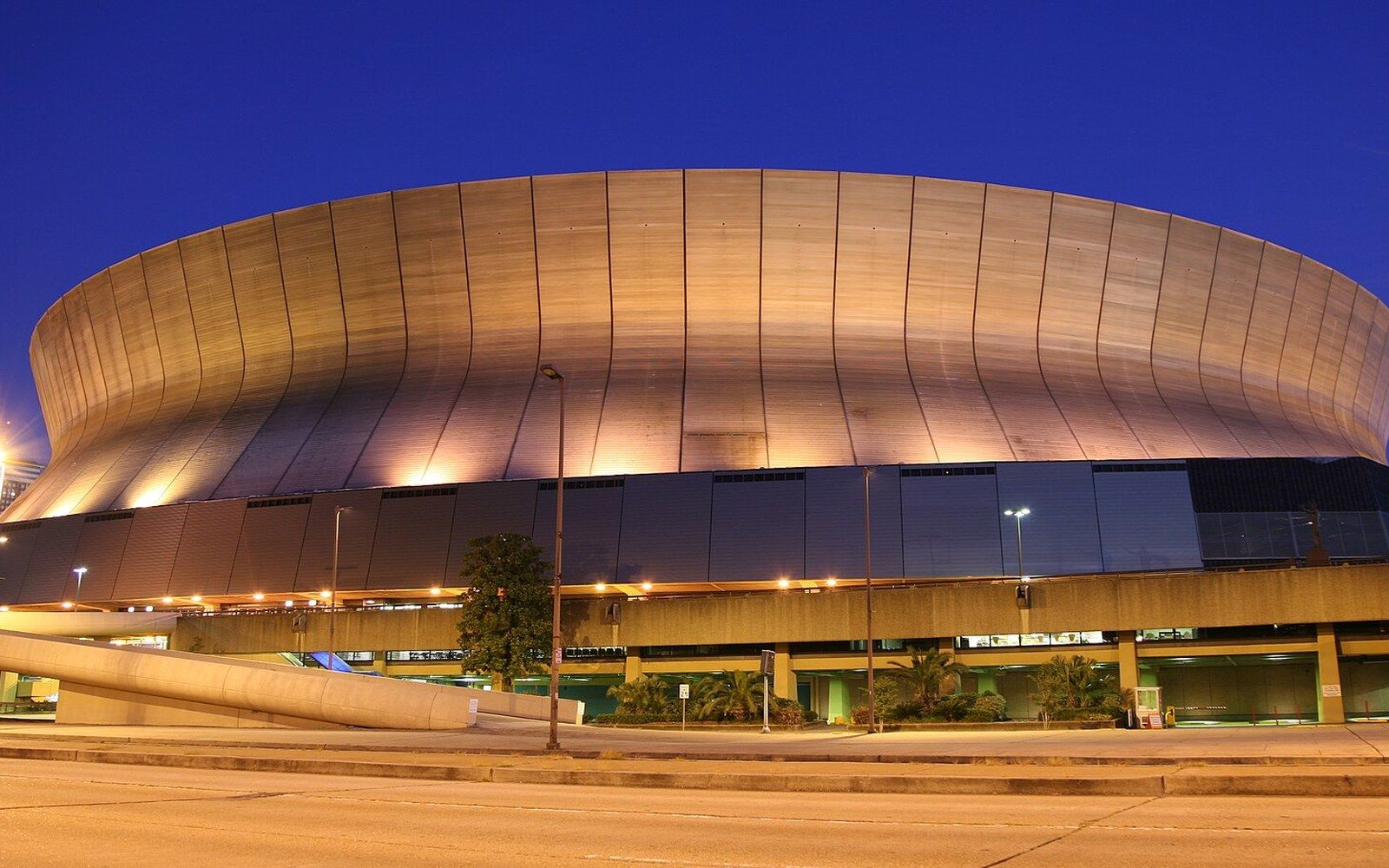
The result is a two-tier structure within the non-power world. Programmes with the stadium, the attendance base and the television presence to sell home guarantee games build a modest buffer. Programmes without those assets sell road games exclusively and spend every dollar coming in. Grambling State and Southern, who meet annually at the Caesars Superdome in New Orleans in the Bayou Classic, represent a different logic again: neither programme profits from a road guarantee in the traditional sense, but both benefit from the Superdome arrangement, which delivers gate revenue and national exposure that a home game at their own facilities could not replicate. The venue itself becomes the mechanism, not the opponent.
Title IX, the 1972 statute that requires proportionality in athletic opportunity between men's and women's programmes, is the reason why.
What all of these arrangements share is the absence of margin for error. A guarantee contract that falls apart — because the host programme cancels, restructures or opts out — leaves a hole in the visiting athletic department's budget that is extremely difficult to fill mid-cycle. Cancellation clauses are negotiated carefully for exactly this reason, and breach-of-contract payments in guarantee deals are documented and real.
The longer history
The guarantee game is not a recent innovation. Programmes across the South have been scheduling road games for fees since well before the Sun Belt Conference was founded in 1976. What changed in the years after conference realignment reshuffled the power structure — particularly after 2012, when the SEC, Big Ten, Pac-12 and others began accumulating television money at a pace that simply outran the rest of Division I — was the scale of the fee and the explicitness of the dependency. The gap between a Power Four programme's per-school television distribution and a Sun Belt programme's is not a matter of percentage points. It is a structural chasm that the guarantee fee does not close; it only makes the chasm navigable.
Eddie Robinson coached at Grambling State for fifty-five seasons and built a programme that sent players to the NFL on a budget that would have been considered modest even by the standards of a small regional university. Doug Williams, drafted seventeenth in 1978 out of Grambling, came through a programme that operated without the financial architecture the guarantee economy now provides. What Robinson built was built on institutional commitment and coaching, not on budget lines. The guarantee game, in its contemporary form, is what programmes require when that kind of sustained institutional investment is not available — which, at most Sun Belt addresses, it is not.
The road fixture is not a competitive event in the sense that fans in Monroe or Lafayette hope for when conference play begins. It is a financial instrument with a final score attached. The athletic director who signs the contract understands this. The coach who prepares his programme to be competitive despite the opponent understands this. And the accounting office that has already distributed the incoming fee across a dozen budget lines before the bus clears the city limits understands it best of all.
The record, in figures
The material below is the documented substance behind the piece: dates that can be checked, capacities as they are published, and figures as they were reported at the time.
What the money moves through
- Guarantee feea fixed payment, negotiated in advance, paid by the host Power Four programme to the visiting school; the visiting team accepts the away fixture and the fee in exchange
- Title IX proportionalitythe requirement that scholarship opportunities be distributed proportionally by gender; non-revenue women's sports are funded partly by guarantee income
- Cancellation clausea contractual penalty paid if the host programme cancels a scheduled guarantee game; a meaningful protection for the visiting athletic department's budget planning
- Travel partythe full operational group that travels to an away game; includes coaches, support staff, medical personnel and band; its cost is a primary draw on the guarantee fee
Key figures (dated)
 The Money
The fee is spent before the bus leaves
The guarantee covers scholarships, travel and staffing across sports that generate no revenue at all.
Short read The Money
A 1972 statute set the arithmetic of a scholarship
Title IX requires proportionality in athletic opportunity, which is why the roster maths of every department is what it is.
Long read Sun Belt
A conference defined by who is not in it
The Sun Belt holds programmes that play Division I football on budgets an order of magnitude below the conference an hour away.
Long read