From Grambling to the seventeenth pick
The quarterback Eddie Robinson built left Grambling in 1978 and spent a decade proving every skeptic wrong — then won the Super Bowl in the most-watched game in American sports.

The school that made him
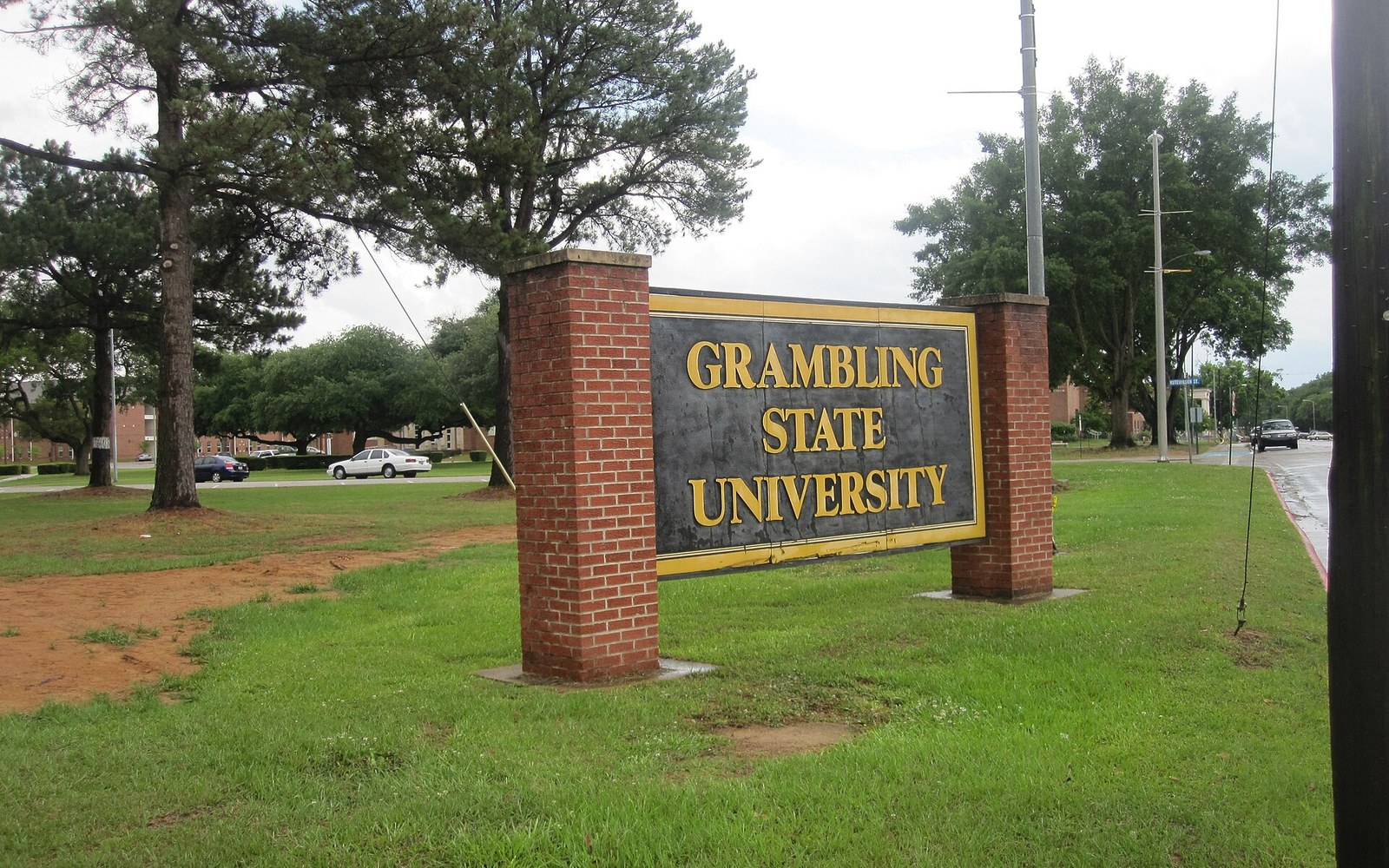
Grambling, Louisiana sits about an hour east of Shreveport, and the town is essentially inseparable from its university. Grambling State had roughly three thousand students in the late 1970s, a small HBCU in the piney hills of north Louisiana competing in the Southwestern Athletic Conference — not the SEC, not the Big Ten, not any of the programs that show up on national television on autumn Saturdays. What it had was Eddie Robinson, the coach who spent 55 seasons building a program that sent players to the NFL in numbers that power-conference schools noticed and occasionally found uncomfortable to explain.
Robinson's method was not complicated: he coached football with a precision that resembled a machinist's attention to specification, and he found quarterbacks who could execute it. Doug Williams arrived at Grambling in the mid-1970s, a tall, strong-armed passer out of Zachary, Louisiana, and Robinson treated him the way he treated every player — with high expectation and no patience for the idea that the SWAC was a lesser proving ground. Williams absorbed the system, the discipline and, crucially, the belief that a Black quarterback could play the position without converting to another one, which in the 1970s was still a live argument in many NFL front offices.
Williams threw for more than 8,000 yards in his college career at Grambling. The Tigers went to the Orange Blossom Classic and the Grambling-Southern rivalry — still filling the Caesars Superdome for the Bayou Classic decades later — was the context in which he developed. When he graduated, the NFL Draft was approaching and the question was not whether Williams could play; it was whether teams would let him play where he had always played.
The seventeenth pick and what it meant
The 1978 NFL Draft is where this story gets its edge. The Tampa Bay Buccaneers selected Doug Williams seventeenth overall, which was not a token pick or a project. Seventeenth overall is a statement of intent; teams spend that kind of capital on players they believe will start. Tampa Bay, an expansion franchise that had gone 0-14 in its first season and 2-12 in its second, needed a quarterback who could build a program, not just fill a roster spot.
Williams started for the Buccaneers and made them competitive. Under head coach John McKay, Tampa Bay reached the NFC Championship Game in the 1979 season — an almost surreal leap for a franchise that had been an industry joke two years earlier. Williams was the engine of that run. He had a powerful arm, could read a defense, and operated with the kind of composure that Robinson had demanded in practice year after year on a small campus in north Louisiana that the national media rarely visited.
The NFL's historical draft records confirm the baseline: Williams spent five seasons in Tampa, went to a Pro Bowl, and by the mid-1980s found himself in a contract dispute that sent him, improbably, to the USFL's Arizona Outlaws — evidence that financial reality and principle collide at every level of the sport, not just in the guarantee-game economy of the Sun Belt.
Washington, January 1988
After the USFL folded, Williams returned to the NFL with the Washington Redskins, now led by head coach Joe Gibbs. He was a backup when the 1987 season opened. Doug Williams was thirty-two years old, which is late-career for any quarterback, and he had been away from the NFL for the better part of two years. Then the starter went down, Williams took over, and Washington won seven consecutive games to close the regular season.
Super Bowl XXII, played in San Diego on January 31, 1988, became the game that answered the question the NFL had been quietly avoiding for most of its modern history. Williams started at quarterback for the Washington Redskins against the Denver Broncos. He became, in that moment, the first Black quarterback to start in a Super Bowl. That fact alone would be enough to mark the game historically, but what happened inside it was almost operatic in its excess.
- Mid-1970sWilliams enrolls at Grambling State under Eddie Robinson
- 1978Selected 17th overall by Tampa Bay Buccaneers in the NFL Draft
- 1979 seasonBuccaneers reach NFC Championship Game
- Mid-1980sContract dispute; plays for USFL's Arizona Outlaws
- 1987Returns to NFL with Washington Redskins as backup
- January 31, 1988Starts Super Bowl XXII; throws 4 TDs in a single quarter; wins MVP
Williams threw four touchdown passes in the second quarter alone — a single-quarter record for the Super Bowl at the time — and Washington scored 35 points in that quarter, which remains a Super Bowl record. He finished with 340 passing yards, won the MVP award and won the game by the score of 42-10. The Broncos, who had entered as favorites with John Elway at quarterback, were effectively finished by halftime. No part of that performance was circumstantial.
The Tampa Bay Buccaneers selected Doug Williams seventeenth overall, which was not a token pick or a project.
The pregame narrative had centered on a question put to Williams during a press conference — a reporter had asked him, with all the delicacy of a two-by-four, how long he had been a Black quarterback. Williams had answered that he had been a quarterback his whole life. He was right, and he proved it in three and a half hours on a January Sunday in California.
What Grambling produced
It is worth sitting with the chain here, because it is the argument this publication keeps returning to: programs outside the power conferences produce players and coaches of consequence, and the economics of that pipeline are not self-evident from the outside. Eddie Robinson, working in a small HBCU town with SWAC budgets and without the television revenue that makes SEC programs look inevitable, sent more than two hundred players to the NFL over his career. Doug Williams was the most visible, and the visibility came in the most public moment the sport provides.
Williams later returned to Grambling as head coach and eventually as athletic director — a full loop, from recruit to institutional steward — and was involved in NCAA compliance and program-building discussions at exactly the moment the sport was restructuring around NIL, the transfer portal and the widening financial gap between power-conference budgets and everyone else. His record as a college coach is modest by Power Four standards and irrelevant by them; what he represented at Grambling, and what Robinson built there across five decades, is not reducible to win-loss columns.
Malone Stadium in Monroe and Cajun Field in Lafayette hold Sun Belt programs. Tiger Stadium in Baton Rouge holds LSU. The distances between them, measured in dollars, are enormous. The distance between Grambling and the seventeenth pick in the 1978 draft is a different kind of measurement — the kind that runs through a coach's system, a player's arm and a press conference answer that has aged better than the question.
Coaches
Fifty-five years at one programme
Eddie Robinson coached Grambling State for 55 seasons and sent a documented number of players into professional football.
Long read Coaches
He never coached a game at the job he took
Bo Rein was hired by LSU and died before the season, which is why his record belongs to North Carolina State and Louisiana remembers him anyway.
Short read Sun Belt
A conference defined by who is not in it
The Sun Belt holds programmes that play Division I football on budgets an order of magnitude below the conference an hour away.
Long read