The halftime show is not an interval here
At the Bayou Classic, the bands are not filler between quarters of football — they are the other game.

Two competitions sharing a field
When Grambling State and Southern meet in the Superdome, the announced attendance is not entirely, or even primarily, a football crowd. A share of those seats will empty after the final whistle with the same detachment the occupants brought to the opening kick. They came for the fifth quarter.
That is the name the SWAC gave the post-game band showdown: the fifth quarter. It is a structured competition between the two programmes' marching bands, judged on musicianship, choreography, visual design and what participants simply call crowd impact. The Bayou Classic between Grambling and Southern has staged it since the 1970s, and it now carries its own weight on the weekend's schedule — separate, named, anticipated. It is not an afterthought to the football. In years when the football game itself resolves early, the fifth quarter is the event people will argue about on Monday.
The culture that produced it runs through the Southwestern Athletic Conference, where band programs are treated as varsity-level operations attached to the institution rather than student-activity add-ons. SWAC schools — the historically Black colleges and universities that make up the conference — built their band traditions in an era when the institutions had limited resources and enormous cultural expectations to meet. The marching band was, at many of these schools, the most visible and most traveled representative of the campus to the broader public. That history is not background noise; it is why the programs are as technically serious as they are.
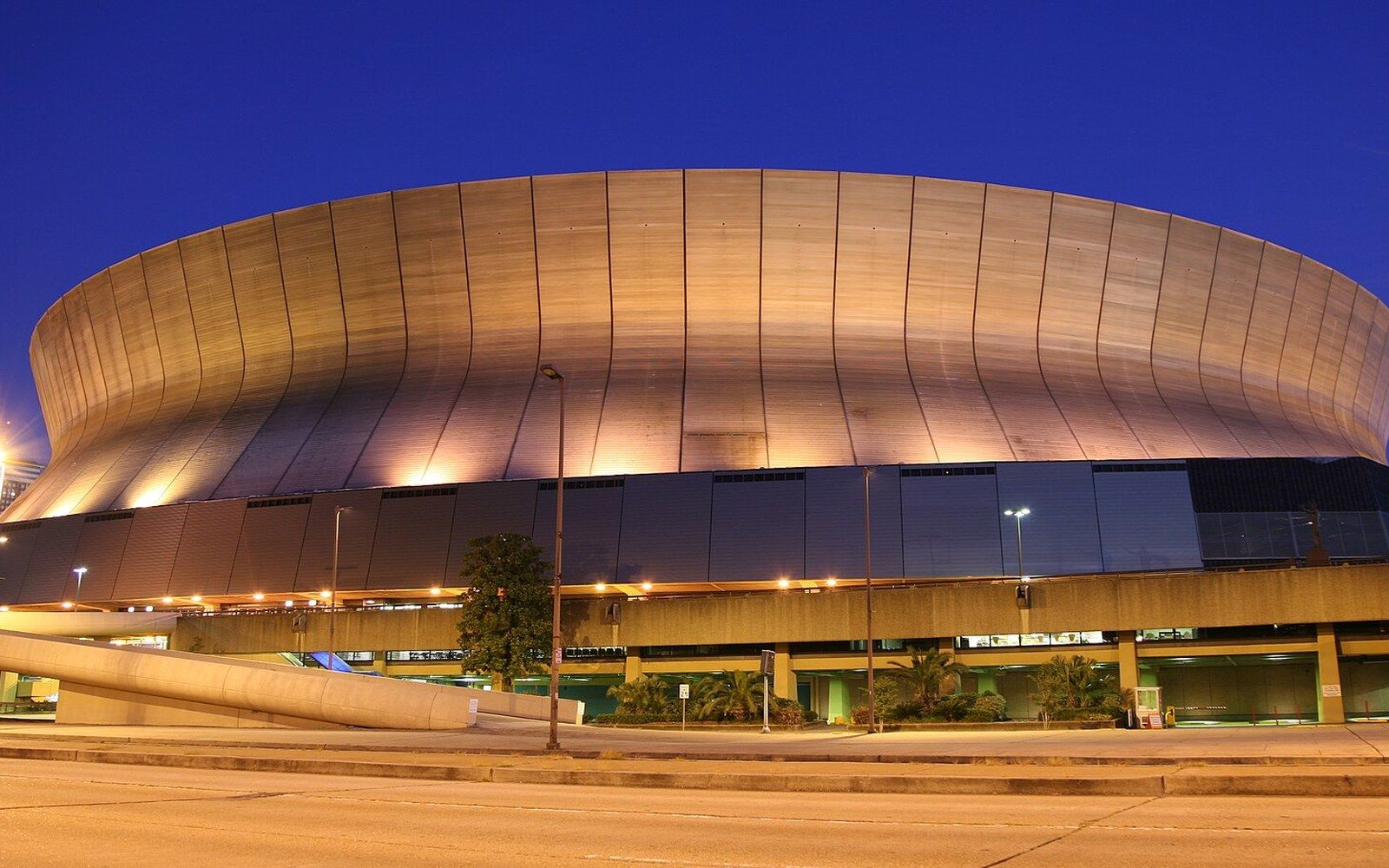
What serious looks like
Grambling State's World Famed Tiger Marching Band has performed at the Rose Bowl, the Cotton Bowl, and in Paris. Southern University's Human Jukebox is the other canonical name in the conversation: a band that produced a recorded history of national invitations and has long served as a recruiting argument for the athletics programme it accompanies. Both have been the subject of independent documentary attention precisely because observers outside the SWAC kept arriving at their performances and finding something that did not match what they expected college bands to be.
The technique is different. SWAC bands play almost entirely by ear — arrangements memorized rather than read from a lyre attached to the instrument, which is common practice in the Historically Black College and University band tradition. The style emphasizes improvisation within structure, volume designed for an outdoor stadium rather than a concert hall, and a rhythmic relationship between the brass and the percussion section that gives the overall sound its specific character. Movements on the field are dense and fast, with the drum major's authority over tempo being something closer to a conductor's than the figurehead role the position holds in other band traditions.

None of this is incidental. The fifth quarter at the Bayou Classic is judged, and the competition requires preparation equivalent to the football team's game-week practice schedule. Directors run sectionals, script the show's architecture and negotiate original arrangements. A winning fifth quarter is a documented institutional achievement, not a crowd-pleasing intermission.
Why this matters to the programmes
For Sun Belt and SWAC athletics departments operating far from power-conference budgets, the band is a recruitment and retention tool that the football field cannot always be. A prospective student who does not play football but who plays trombone at a high level is weighing Southern's Human Jukebox against competing offers. That decision affects enrollment numbers that in turn affect institutional funding. The band is not a separate line item with no connection to the athletic department's broader arithmetic; it is part of what makes the programme legible and attractive to the audience it is actually serving.
The Bayou Classic draws tens of thousands to New Orleans each year in the Thanksgiving weekend window — an economic event the city has tracked as significant since the early 1980s. A portion of that draw is the football game. A measurable portion is the fifth quarter, the pageantry, the social gathering the weekend frames. To treat the marching bands as decoration is to misread where a substantial part of the value of the event actually sits.
The record, in figures
The material below is the documented substance behind the piece: dates that can be checked, capacities as they are published, and figures as they were reported at the time.
Key terms
- fifth quarterthe post-game SWAC band competition staged at games like the Bayou Classic; judged, named and treated as a separate event from the football
- Human Jukeboxthe name of Southern University's marching band; one of the two signature SWAC band programmes
- HBCUHistorically Black College or University; the institutional category that defines SWAC membership and the cultural tradition the bands reflect
- playing by earthe SWAC/HBCU band practice of memorizing rather than sight-reading arrangements, central to the style's sound and performance density
Chronology
- 1970sBayou Classic established; fifth quarter format begins its run as a named competition
- Early 1980sNew Orleans begins tracking the Classic as a significant economic event for the city
- Modern eraGrambling's Tiger Marching Band performs documented international appearances including Paris and multiple major bowl games
 Louisiana
A stadium sized for the programme it has, not the one it wants
Malone Stadium in Monroe is the working home of a Sun Belt programme and its capacity is an honest number.
Long read Louisiana
The other one, and the rivalry that comes with it
Cajun Field in Lafayette holds the in-state fixture that matters most to both programmes.
Short read Sun Belt
A conference defined by who is not in it
The Sun Belt holds programmes that play Division I football on budgets an order of magnitude below the conference an hour away.
Long read